Jersey Plumbing Service

Basement Flooding Prevention for Basking Ridge

Basement Flooding Prevention for Basking Ridge Homeowners

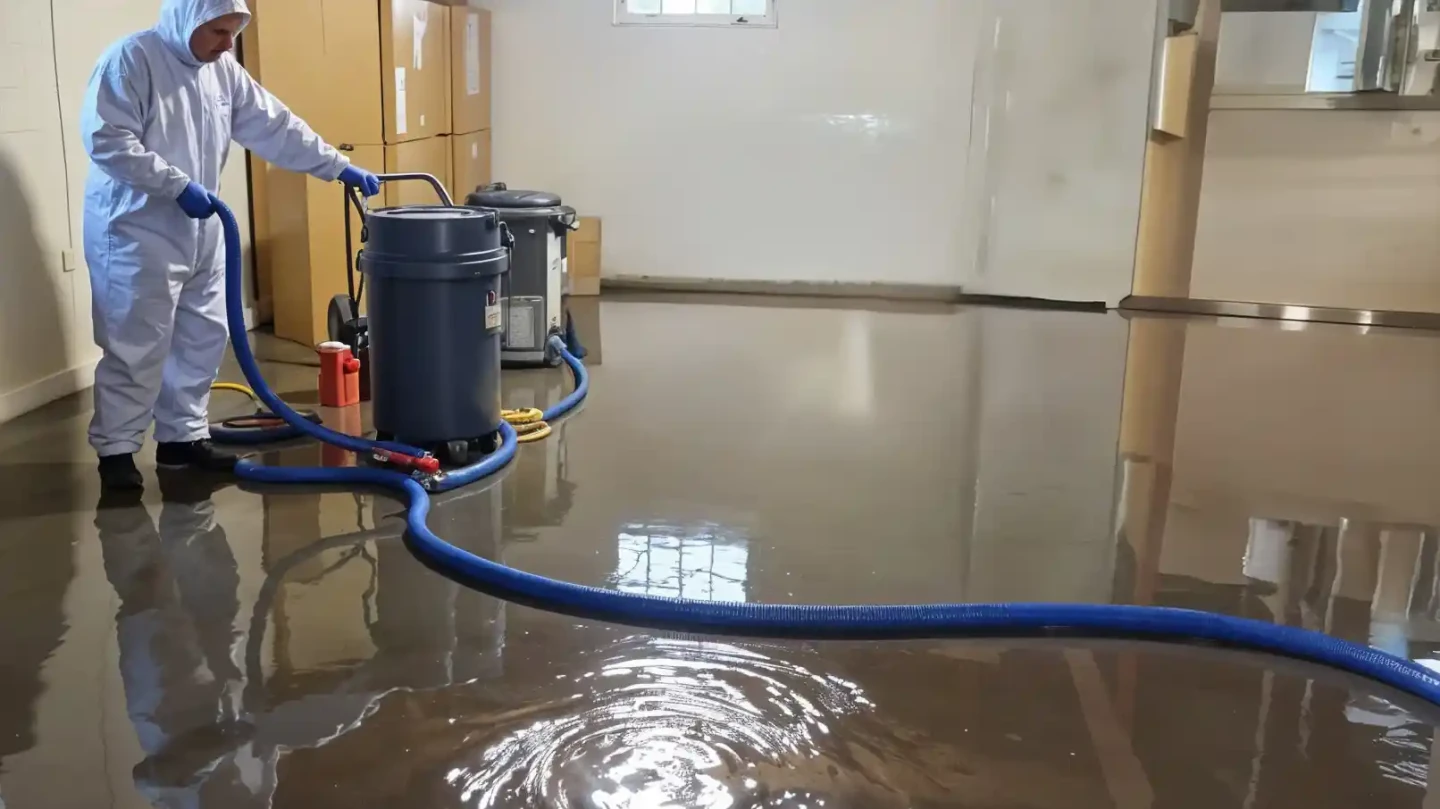
Basking Ridge sits in a part of Somerset County where rolling terrain, clay-heavy soils, and seasonal nor'easters create a perfect recipe for water intrusion below grade. If you own a home here, you've probably heard a neighbor's horror story about a finished basement ruined after a single heavy storm. Preventing basement flooding in Basking Ridge requires understanding what makes this area uniquely challenging and then matching your defenses to those specific conditions. The good news: most water problems below grade are solvable with the right combination of drainage management and mechanical systems. The bad news: generic advice from national home improvement sites rarely accounts for the soil composition and water table behavior that Basking Ridge homeowners actually deal with. This guide focuses on the local factors that matter most and the sump pump strategies that keep basements dry year-round.

Understanding Local Drainage Challenges

Basking Ridge is part of the Passaic River watershed, and much of the township sits on glacial till: a dense mix of clay, silt, sand, and gravel deposited thousands of years ago. That geological history matters because clay-rich soils drain poorly. After a heavy rain, water doesn't percolate downward the way it would in sandy coastal areas. Instead, it moves laterally through the soil, building hydrostatic pressure against your foundation walls.

The local water table compounds the issue. Parts of Basking Ridge, particularly neighborhoods near the Great Swamp National Wildlife Refuge and lower-elevation areas along the Passaic River's tributaries, sit close to seasonally high water tables. During spring snowmelt or after consecutive storms in fall, the water table can rise to within a few feet of basement slab level. When that happens, water doesn't just push against walls: it pushes up through floor cracks and the cold joint where the slab meets the foundation.

Topography plays a role too. Many Basking Ridge homes were built on gently sloping lots that look well-graded until you watch where water actually flows during a downpour. Homes on Liberty Corner Road, Lyons Road, and in older subdivisions near the town center often have grading that has settled over decades, directing surface runoff toward the foundation rather than away from it. A simple slope correction (six inches of fall over the first ten feet from the foundation) can eliminate a surprising amount of water intrusion, but most homeowners never measure their grade.

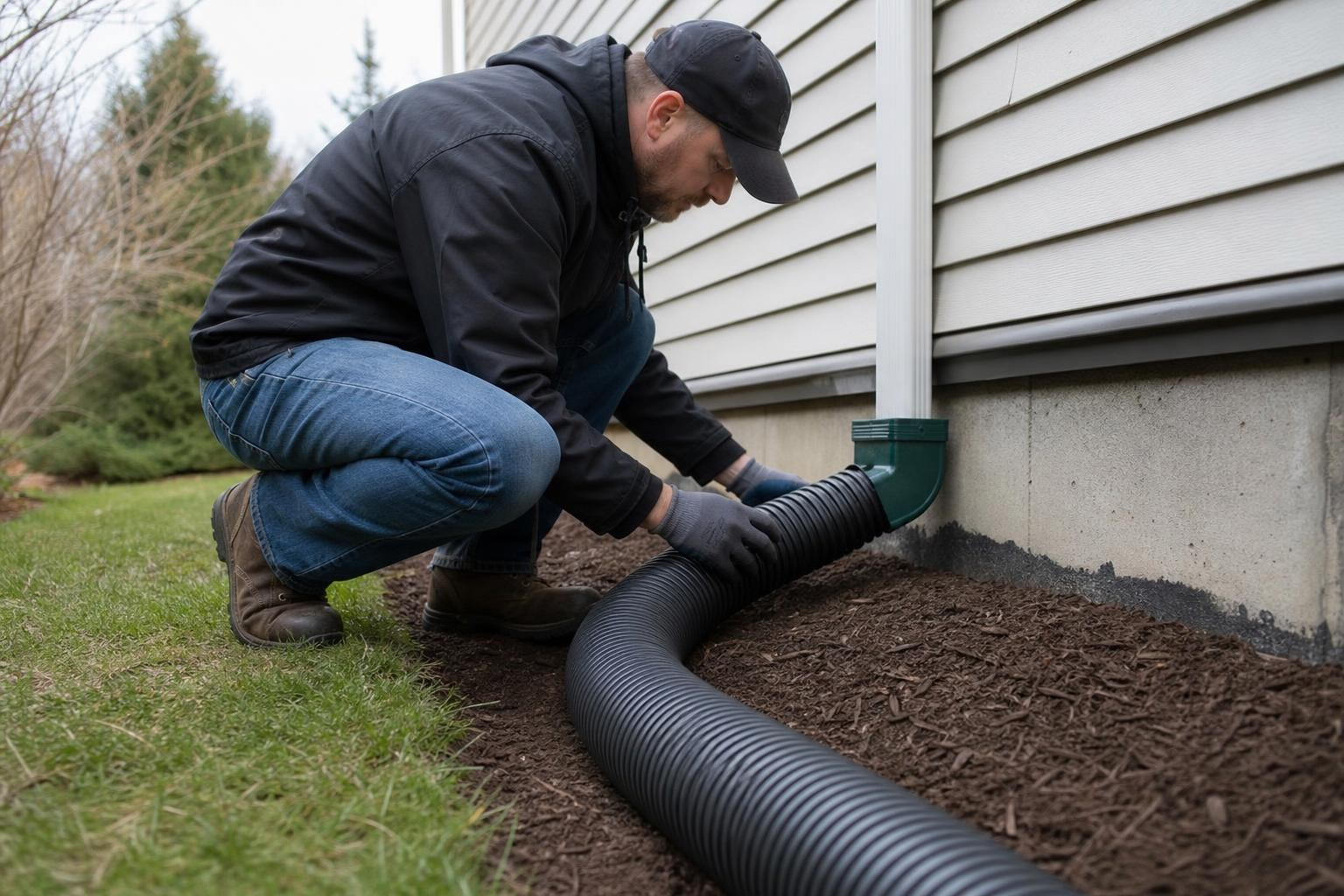
Gutter systems are another underappreciated factor. A typical 1,500-square-foot roof sheds roughly 900 gallons of water during a one-inch rainstorm. If your downspouts dump that water within two or three feet of the foundation, you're essentially pouring hundreds of gallons directly into the soil around your basement walls. In Basking Ridge's clay soils, that water doesn't dissipate quickly. It pools, saturates, and eventually finds its way through any crack or joint in the concrete.

Older homes in the area face additional challenges. Many homes built before the 1980s have exterior foundation waterproofing that has deteriorated or was minimal to begin with. Some rely on clay tile drain systems that clog with root intrusion and sediment over time. If your home was built in the 1960s or 1970s, there's a reasonable chance your original perimeter drain is partially or fully blocked.

Here's what a practical assessment looks like for a Basking Ridge homeowner:

  • Walk your property during a heavy rain and note where water pools or flows toward the house
  • Check that all downspouts extend at least four to six feet from the foundation, ideally draining to daylight or a dry well
  • Look for efflorescence (white mineral deposits) on interior basement walls, which signals water migration through the concrete
  • Inspect the cold joint at the base of your walls for dampness or active seepage
  • Check your sump pit, if you have one, to see how frequently the pump cycles during and after storms

The combination of clay soils, seasonal water table fluctuations, aging drainage infrastructure, and grading issues makes Basking Ridge a place where passive waterproofing alone rarely gets the job done. Most homes here need an active water management system, which brings us to sump pumps.

Sump Pump Solutions

A sump pump is the last line of defense in a basement waterproofing system, and for most Basking Ridge homes, it's also the most critical one. The pump sits in a sump pit (also called a sump basin or crock), typically installed at the lowest point of the basement floor. An interior perimeter drain system, often called a French drain or drain tile, collects water that enters through the walls or floor and channels it to the pit. The pump then ejects that water away from the house.

The concept is simple, but execution matters enormously. A poorly sized pump, a cheap backup system, or a pit that's too small can fail exactly when you need protection most: during the kind of prolonged, heavy storms that hit central New Jersey several times a year.

Pump Selection

Choosing the right primary sump pump comes down to three factors: pumping capacity, switch type, and build quality.

Pumping capacity is measured in gallons per hour (GPH) at a given vertical lift height. Most residential sump pumps are rated at a specific GPH at an eight- or ten-foot head (the vertical distance water must travel from the pit to the discharge point). For a typical Basking Ridge home with moderate water intrusion, a pump rated at 3,000 to 4,000 GPH at ten feet of head is a solid starting point. Homes in lower-elevation areas or near the Great Swamp may need higher-capacity pumps, sometimes 5,000 GPH or more, especially if the pump cycles frequently during storms.

The float switch is the component that tells the pump when to turn on and off, and it's the most common point of failure. There are three main types:

  • Tethered float switches work like a toilet float and are reliable in wide pits but can get stuck in narrow ones
  • Vertical float switches move up and down on a rod and work better in tight spaces
  • Electronic switches have no moving parts and tend to last longer, though they cost more upfront

For most homeowners, a vertical float or electronic switch offers the best reliability. Tethered floats are fine in a large pit but can jam against the pit wall or get tangled with the discharge pipe in the 18-inch-diameter pits common in older Basking Ridge homes.

Build quality is where you either save money now or spend it later. Cast iron and stainless steel housings dissipate heat better and last longer than thermoplastic models. A quality primary pump from a manufacturer like Zoeller, Liberty, or Wayne will typically run eight to twelve years before needing replacement. Budget models might last three to five. Given that a basement flood can easily cause $10,000 to $30,000 in damage to a finished space, spending $300 to $500 on a reliable primary pump is one of the better investments you can make.

Backup Power Systems

Here's the scenario that catches Basking Ridge homeowners off guard: a major storm knocks out power, your primary pump goes silent, and water starts rising in the pit. This isn't hypothetical. PSE&G outages during nor'easters and summer thunderstorms can last hours or even days. Your primary pump is useless without electricity, and those are precisely the conditions when water intrusion is at its worst.

You have two main backup options: battery backup pumps and water-powered backup pumps.

Battery backup systems use a dedicated pump (separate from your primary) powered by a marine deep-cycle battery or a set of batteries. When the power goes out, the backup pump activates automatically. A good battery backup system can pump 2,000 to 3,000 gallons on a full charge, which typically provides eight to twelve hours of intermittent pumping. For storms that knock out power for a day or more, battery capacity becomes a real concern. Some newer systems use lithium-ion batteries that hold charge longer and recharge faster when power returns.

Water-powered backup pumps use municipal water pressure to create suction and pump water out of the pit. They require no electricity and never run out of "fuel" as long as your municipal water supply is active. The downside: they use roughly one gallon of municipal water for every two gallons they pump out, which increases your water bill during extended use. They also require sufficient water pressure (typically 40 PSI or higher) to function effectively. For Basking Ridge homes on NJ American Water's system, pressure is generally adequate, but homes on well water can't use this option.

A belt-and-suspenders approach that many local waterproofing contractors recommend: install a quality primary pump, add a battery backup pump, and consider a whole-house generator if your home is in a flood-prone area. A standby generator (natural gas or propane) keeps your primary pump running indefinitely during outages and also powers your HVAC, refrigerator, and other essentials. The installed cost for a standby generator runs $8,000 to $15,000 in the Basking Ridge area, but for homes with finished basements valued at $50,000 or more, the math works out quickly.

One more detail that gets overlooked: test your sump pump system quarterly. Pour five gallons of water into the pit and confirm the pump activates, runs, and shuts off properly. Check the battery on your backup system (most units have a test button or indicator light). And inspect the discharge line outside to make sure it's clear of debris, ice, or animal nests. A pump that worked fine last spring might have a stuck float or a frozen discharge line when you actually need it.

Protecting Your Basking Ridge Home for the Long Term

Basement flooding prevention for Basking Ridge homeowners isn't a one-time project. It's an ongoing commitment to maintaining drainage, monitoring your mechanical systems, and adapting as conditions change. The homes that stay dry are the ones where owners check their grading annually, keep gutters clean and extended, test their sump systems regularly, and replace aging components before they fail.

If your basement has never flooded, don't assume it never will. Soil conditions shift, water tables fluctuate, and the storms hitting central New Jersey have been delivering more rainfall per event than they did twenty years ago. A proactive approach costs a fraction of what emergency remediation runs after a flood.

Start with the basics: grade your lot properly, manage your roof runoff, and install or upgrade your sump pump system with a reliable backup. Those three steps alone prevent the vast majority of basement water problems in this area. Your basement is too valuable, and too expensive to repair, to leave unprotected
Emergency Plumber

Best Emergency Plumber in Basking Ridge: What to Know Before You Call

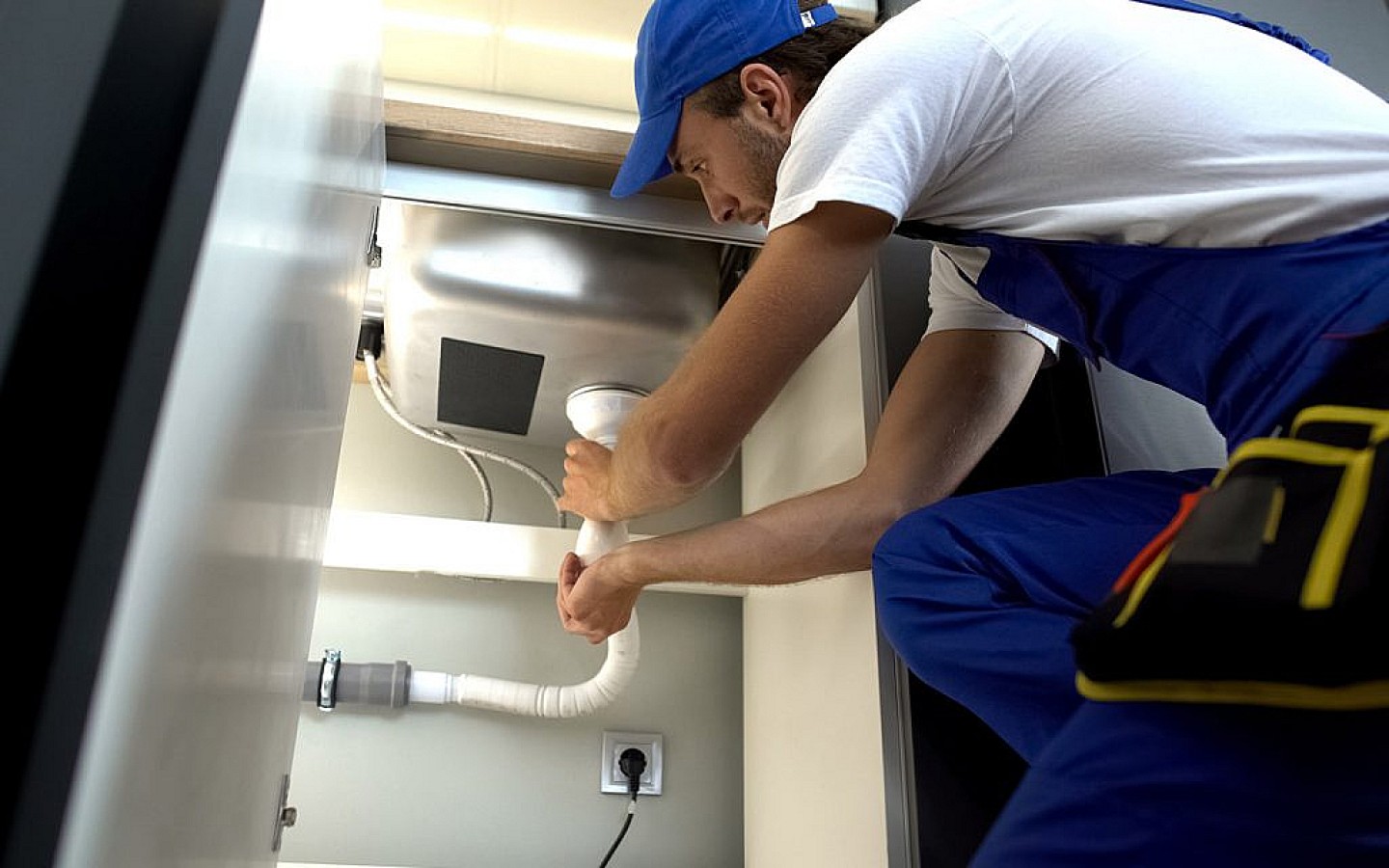
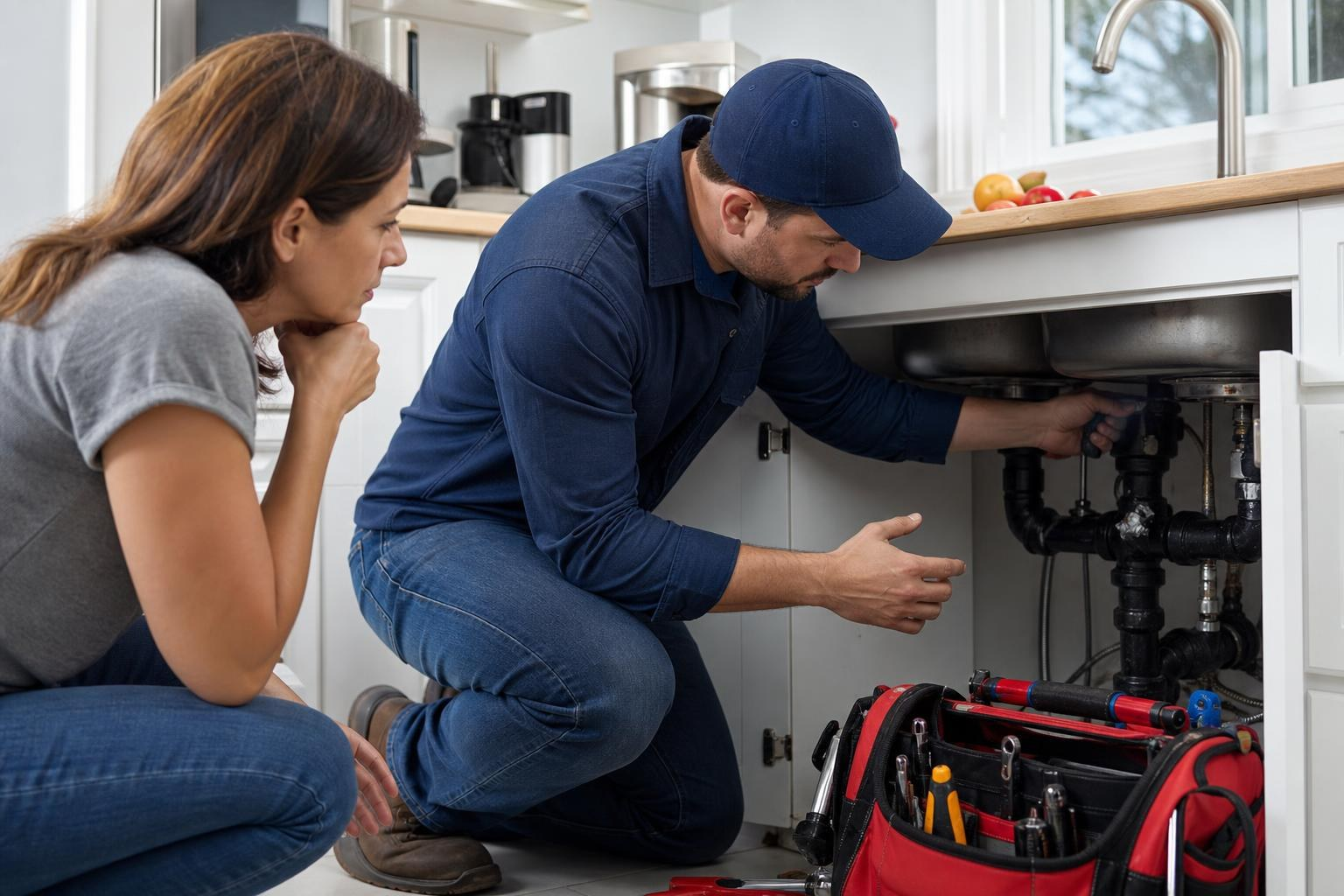
A burst pipe at 2 a.m. on a January night in Basking Ridge isn't a hypothetical scenario: it's a reality that hundreds of homeowners in Somerset County face every winter. When water is pooling on your basement floor and your phone is in your hand, you don't have time to research plumbing companies from scratch. Knowing how to identify the best emergency plumber in Basking Ridge before disaster strikes is the single most valuable piece of homework you can do as a homeowner. The difference between a quick, professional fix and a drawn-out nightmare often comes down to decisions made in the first few minutes of a crisis. This guide covers the specific factors that separate reliable emergency plumbers from the rest: response times, service guarantees, pricing structures, and the red flags that should send you running. Whether you're dealing with a sewer backup, a frozen pipe, or a water heater failure, these details will help you make a confident call when it matters most.

Response Time & Availability

The whole point of calling an emergency plumber is speed. A slow response during a plumbing emergency can turn a $500 repair into a $15,000 water damage restoration project. So this is the first thing you should evaluate, and it deserves more scrutiny than most people give it.

What "24/7" Actually Means

Most plumbing companies in the Basking Ridge area advertise 24/7 availability, but the reality behind that claim varies wildly. Some companies have a dedicated on-call technician who can be at your door within 30 to 60 minutes. Others route after-hours calls to an answering service that takes a message and promises a callback "as soon as possible," which could mean two hours or the next morning.

Before you need emergency service, call the company's main number at an odd hour: 10 p.m. on a Tuesday, for example. If a real person answers and can give you a specific arrival window, that's a strong sign. If you get voicemail or a third-party operator who can't confirm when a plumber will actually show up, keep looking.

Geographic Proximity Matters

Basking Ridge sits in a pocket of northern New Jersey where traffic patterns and distance from a plumber's home base can dramatically affect arrival times. A company headquartered in Bernardsville or Warren Township will almost always reach you faster than one based in Edison or Morristown, even if the latter has more trucks on the road.

Ask where their technicians are dispatched from. A company with plumbers who live in or near the 07920 zip code can often arrive in under 30 minutes during off-peak hours. That's a meaningful advantage when water is actively flowing where it shouldn't be.

Seasonal Considerations

Winter is peak season for plumbing emergencies in this part of New Jersey. Frozen pipes, failed water heaters, and boiler issues all spike between December and March. The best emergency plumbers in the Basking Ridge area staff up during these months, but smaller operations may get overwhelmed. Ask how many technicians are on call during winter nights and weekends. If the answer is one, and that person is covering all of Somerset County, your wait could be significant during a cold snap when everyone's pipes are bursting simultaneously.

Service Quality & Guarantees

Getting someone to your house fast is only half the equation. The repair needs to be done right, or you'll be making the same call again in a week, possibly with worse damage.

Licensing and Insurance: Non-Negotiable

New Jersey requires plumbers to hold a state license, and any plumber working in Basking Ridge should also carry general liability insurance and workers' compensation coverage. These aren't just bureaucratic checkboxes. If an unlicensed plumber causes additional damage to your home, or if a worker is injured on your property and lacks coverage, you could be personally liable.

Ask for the license number before any work begins. You can verify it through the New Jersey Division of Consumer Affairs. If a company hesitates to provide this information, that tells you everything you need to know.

Workmanship Guarantees

A confident plumber stands behind their work. Look for companies that offer written warranties on both parts and labor: 90 days is the bare minimum for emergency repairs, and many reputable firms offer one year or more. The warranty should cover the specific repair performed, not just the part that was installed.

Get the guarantee in writing before the technician starts. Verbal promises made at 3 a.m. while your kitchen is flooding are worth exactly nothing if a dispute arises later. A professional company will have standard warranty documentation ready, even for emergency calls.

Credentials That Actually Matter

Beyond the basic state license, a few credentials signal a higher level of competence. Plumbers certified by manufacturers like Rinnai, Navien, or Bradford White have specific training on those systems, which matters if your emergency involves a tankless water heater or a high-efficiency boiler. Membership in trade organizations like the Plumbing-Heating-Cooling Contractors Association isn't a guarantee of quality, but it does indicate a company that invests in ongoing training and adheres to a code of ethics.

Online reviews on Google and Yelp are useful but imperfect. Pay attention to how companies respond to negative reviews. A plumber who addresses complaints professionally and offers to make things right is generally more trustworthy than one with a perfect five-star rating and no negative feedback at all: the latter is often curated or fake.

Pricing & Transparency

Emergency plumbing costs more than scheduled service. That's a fact of life, and any honest plumber will tell you the same. But "costs more" doesn't mean "costs whatever we feel like charging." The difference between a fair emergency rate and price gouging is transparency, and you should know what to expect before the crisis hits.

How Emergency Pricing Typically Works

Most plumbing companies in the Basking Ridge area use one of two pricing models for emergency calls. The first is a flat diagnostic or trip fee, usually between $75 and $150, combined with per-job pricing once the problem is identified. The second is an hourly rate with a minimum charge, typically one to two hours. Hourly rates for after-hours emergency work in northern New Jersey generally range from $150 to $300 per hour in 2026, depending on the company and the complexity of the issue.

Neither model is inherently better. What matters is that the plumber explains the pricing structure clearly before starting any work. If a technician shows up and starts turning wrenches without discussing costs, stop them. A reputable emergency plumber will always provide an estimate, even a rough one, before beginning repairs.

Red Flags in Emergency Pricing

Watch out for companies that refuse to give any price indication over the phone. While no plumber can quote an exact price without seeing the problem, they should be able to tell you their trip fee, their hourly rate or flat-rate structure, and a general range for common emergencies like a burst pipe or a clogged sewer line.

Be wary of dramatically low quotes, too. A company that quotes $50 for an emergency visit is either planning to upsell you aggressively once they arrive or cutting corners on the repair. In a market like Basking Ridge, where the cost of living and operating a business is above the national average, rock-bottom pricing usually means rock-bottom quality.

Getting an Estimate in Writing

Even at 2 a.m., you have the right to a written estimate before authorizing work. The estimate should include the diagnostic fee (if any), the cost of parts, the labor charges, and any after-hours surcharges. Most professional plumbers carry tablets or phones with estimating software and can generate this documentation on the spot.

If the scope of the repair changes once work begins, a good plumber will stop and explain the new situation before proceeding. Surprise charges on the final bill are a sign of a company you should never call again.

Protecting Yourself Financially

One practical step: check your homeowner's insurance policy before an emergency happens. Many policies cover sudden water damage from burst pipes or failed fixtures, but they typically don't cover damage caused by gradual leaks or deferred maintenance. Knowing what's covered in advance helps you make better decisions under pressure and gives you a realistic picture of your out-of-pocket costs.

Some plumbing companies also offer membership or maintenance plans that include discounted emergency rates and priority scheduling. If you own an older home in Basking Ridge with aging plumbing infrastructure, these plans can pay for themselves quickly.

Finding the Right Emergency Plumber Before You Need One

The worst time to search for a reliable emergency plumber is during an actual emergency. The best approach is to identify two or three companies now, verify their credentials, understand their pricing, and save their numbers in your phone. When a pipe bursts or a sewer backs up, you'll be able to make a confident call instead of a desperate one.

Here's a quick checklist to work through before an emergency ever happens:

  • Call after hours to test response time and availability
  • Verify the company's New Jersey plumbing license
  • Ask about warranty terms for emergency repairs
  • Confirm the pricing structure: trip fee, hourly rate, or flat rate
  • Read recent reviews, focusing on emergency-specific feedback
  • Check that they carry liability insurance and workers' comp

Basking Ridge homeowners who do this homework in advance consistently report better outcomes: faster service, fairer pricing, and repairs that hold up over time. Knowing what to look for before you call an emergency plumber is the kind of preparation that saves you money, stress, and potentially thousands of dollars in water damage. Take 30 minutes this weekend to make those calls. Your future self, standing in a dry basement at 3 a.m., will thank you.

Signs Your Basking Ridge Home Needs Professional Pipe Inspection

Signs Your Basking Ridge Home Needs Professional Pipe Inspection

Most homeowners in Basking Ridge don't think about their pipes until something goes visibly wrong: a puddle forming under the kitchen sink, a toilet that won't stop running, or a mysterious stain spreading across the basement ceiling. But by the time these problems surface, the damage has often been building for months or even years. Basking Ridge homes, many of which were built between the 1960s and 1990s, sit on aging infrastructure that doesn't always announce its decline loudly. The area's clay-heavy soils and seasonal freeze-thaw cycles put extra stress on underground lines, making routine awareness of your plumbing system more than just a good habit. Knowing the signs that your home needs a professional pipe inspection can save you thousands in emergency repairs and protect your property value in a competitive Somerset County market. The tricky part is recognizing those signs before they escalate into full-blown crises. That's what this piece is about: the specific, sometimes subtle warnings your plumbing system sends when something isn't right underground or behind the walls.

Why Pipe Inspection Matters

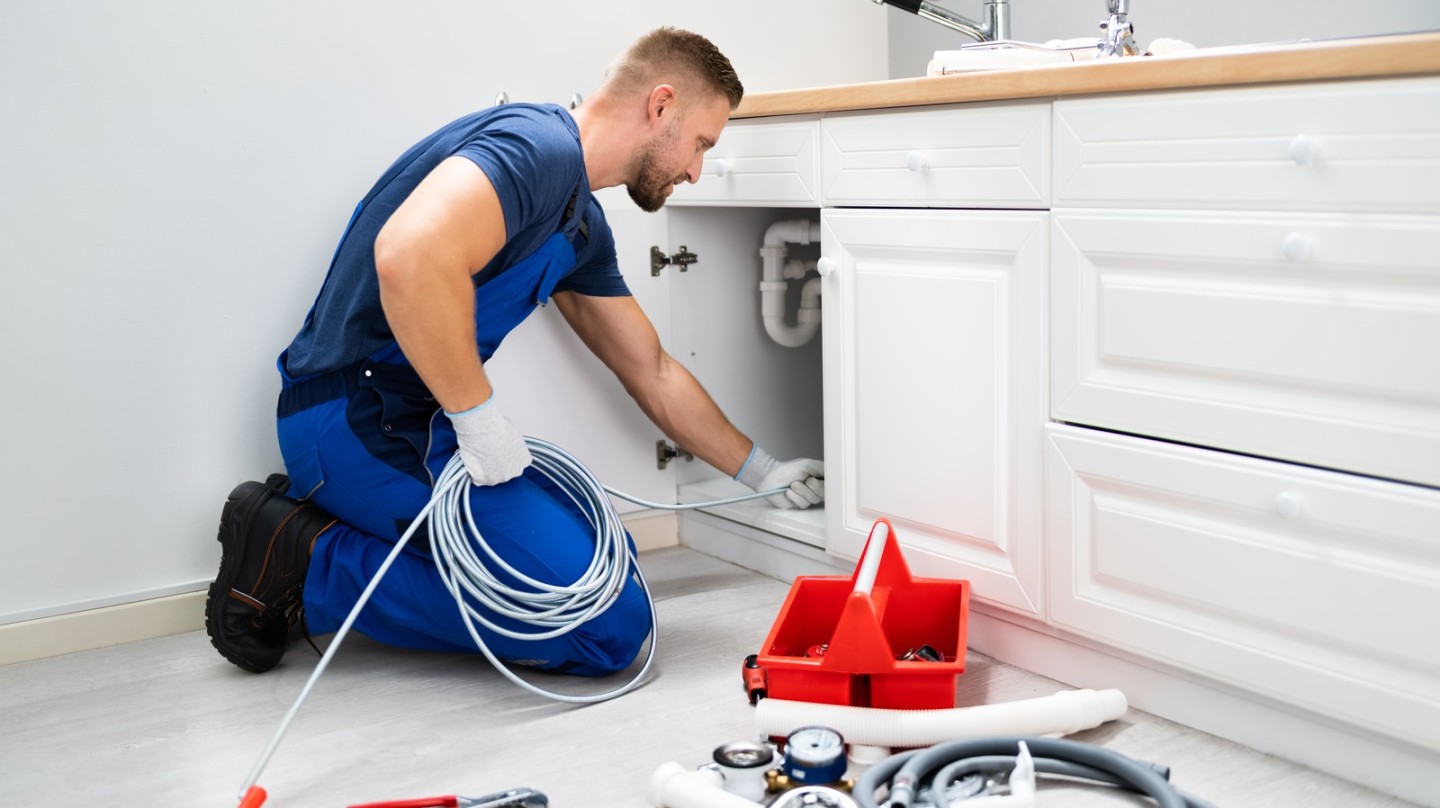
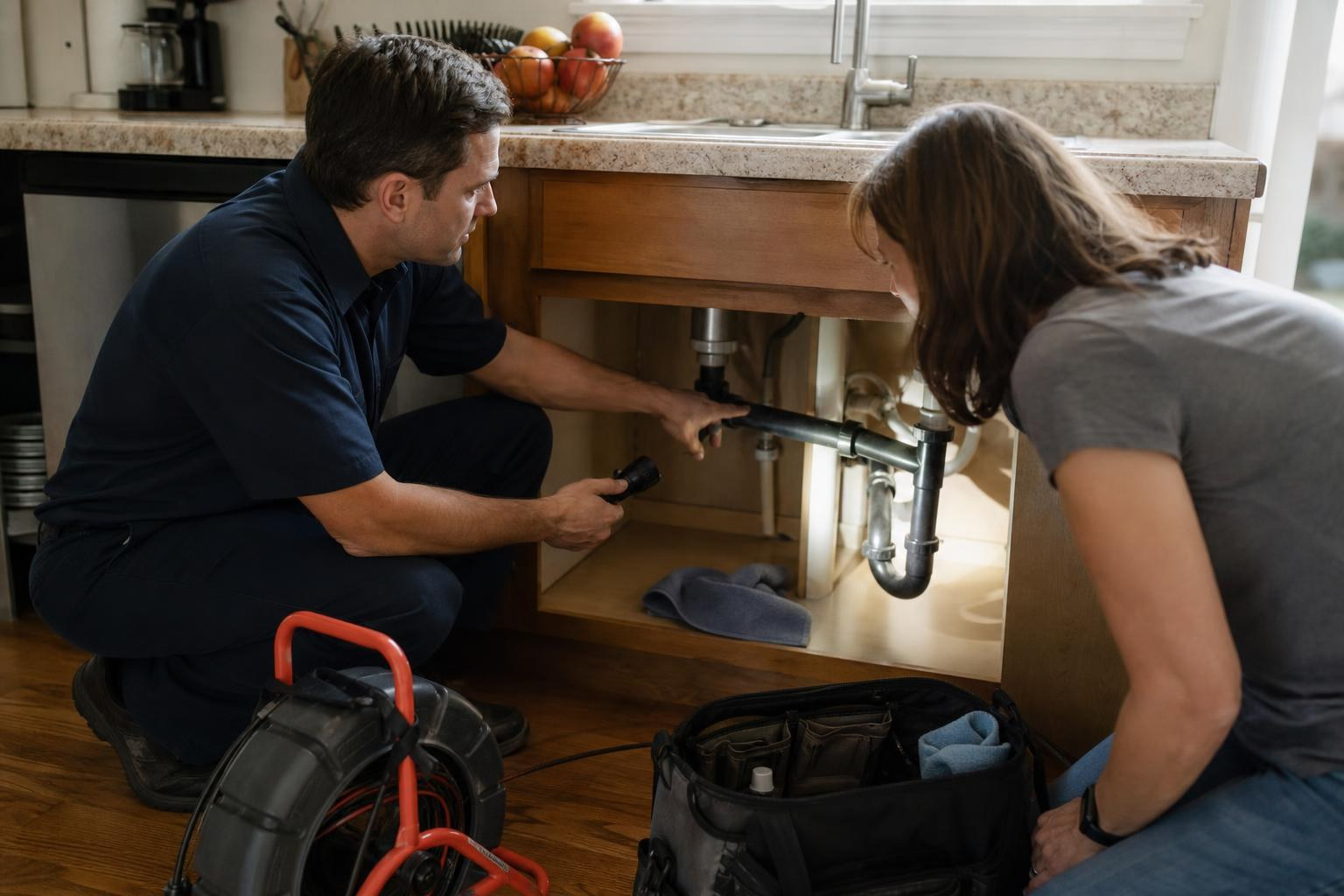
A professional pipe inspection isn't a luxury service reserved for old Victorian homes or commercial buildings. It's a diagnostic tool that uses camera technology to see inside your pipes without tearing up your yard or walls. A technician feeds a small, waterproof camera through your plumbing system, capturing real-time footage of the pipe interior. This reveals cracks, root intrusion, corrosion, bellied sections (where a pipe has sunk and created a low spot that collects waste), and blockages that no amount of drain cleaner will fix.

For Basking Ridge homeowners specifically, this matters because of the area's building history. Homes built before the mid-1980s may still have cast iron drain lines, which have a functional lifespan of roughly 50 to 75 years. That means many of these pipes are now at or past their expected service life. Homes from the 1990s and early 2000s might have polybutylene supply lines, a material that became notorious for unexpected failures. Without an inspection, you're essentially guessing about the condition of a system that handles thousands of gallons of water every month.

The cost difference between proactive inspection and reactive emergency repair is stark. A camera inspection typically runs between $150 and $500 depending on the scope. A sewer line replacement can cost $5,000 to $20,000 or more, depending on depth, length, and whether the line runs under a driveway, patio, or landscaping. Catching a problem early, say a hairline crack that's just starting to let in root fibers, means you can often address it with a trenchless liner repair rather than a full excavation.

There's also the health angle. Compromised pipes can introduce contaminants into your water supply or allow sewer gases to seep into your living space. Neither situation is something you want to discover after someone in your household gets sick.

Water Discoloration & Odor

If your tap water comes out with a brown, yellow, or reddish tint, that's not just an aesthetic problem. Discolored water usually means corrosion inside your pipes is releasing iron, manganese, or sediment into the water flow. A brief episode after the municipal water system does maintenance is normal, but persistent discoloration, especially from the hot water side only, points to deterioration in your home's own pipes or water heater.

Odor is an even more urgent signal. A rotten egg smell from your water suggests hydrogen sulfide, which can form when bacteria colonize corroded sections of pipe. A musty or sewage-like smell near drains, even when they're not in use, often indicates a cracked sewer line or a dried-out P-trap that's allowing gases to escape. In Basking Ridge homes with basements, these odors sometimes get dismissed as "just a basement smell," but they shouldn't be ignored.

Both discoloration and odor warrant a professional look inside the pipes. A camera inspection can pinpoint exactly where corrosion is occurring or where a crack is letting groundwater (and the soil bacteria it carries) infiltrate the system. This is far more useful than guessing or simply installing a whole-house filter, which treats the symptom but not the cause.

Low Water Pressure

A sudden drop in water pressure across your whole house is hard to miss, but gradual pressure loss is the sneakier version of the same problem. You might notice the shower doesn't feel as strong as it used to, or the garden hose takes longer to fill a bucket. These changes happen slowly enough that you adjust without realizing the system is declining.

Low pressure in Basking Ridge homes can stem from several pipe-related causes. Mineral buildup inside galvanized steel pipes gradually narrows the interior diameter, restricting flow. A small leak underground can reduce the volume reaching your fixtures without producing any visible evidence above ground. Root intrusion into the main water line creates partial blockages that worsen over time, especially during growing season when tree roots are most active.

If only one fixture has low pressure, the issue might be localized: a clogged aerator or a failing shut-off valve. But when multiple fixtures are affected, or when pressure drops noticeably during peak usage times, the problem is likely systemic. A pipe inspection can determine whether you're dealing with internal scaling, a partial obstruction, or a leak that's been silently wasting water and inflating your utility bill.

Common Warning Signs

Beyond water quality and pressure issues, your home sends other signals that its plumbing needs professional attention. Some of these are obvious once you know what to look for, while others are easy to attribute to unrelated causes.

Unexplained increases in your water bill are one of the most reliable early indicators. If your usage habits haven't changed but your bill has crept up by 15% to 25% over a few months, there's a good chance water is escaping somewhere in your system. The EPA estimates that household leaks waste nearly 1 trillion gallons of water annually across the United States, and many of those leaks occur in pipes that homeowners can't see or access without professional equipment.

Recurring drain clogs deserve more scrutiny than most people give them. A single slow drain is usually a localized blockage: hair, soap buildup, or food debris. But when multiple drains in your home are sluggish simultaneously, or when the same drain keeps clogging despite repeated clearing, the issue is likely deeper in the system. Tree root infiltration, a collapsed section of pipe, or a bellied line that traps waste are all common culprits in Basking Ridge neighborhoods with mature landscaping.

Watch for these physical signs around your property:

  • Wet or unusually green patches in the yard, especially along the path of your sewer line, which suggest a leak is fertilizing and watering the soil from below
  • Foundation cracks that appear or widen over a short period, potentially caused by water erosion undermining the soil beneath your home
  • Mold or mildew on interior walls or ceilings that isn't explained by humidity or ventilation issues
  • Sounds of running water when no fixtures are in use, which can indicate a leak in a supply line within the walls or under the slab

Pest problems can also trace back to pipe issues. Cockroaches, drain flies, and even rodents can enter homes through cracks in sewer lines. If you're dealing with recurring pest issues that exterminators can't seem to resolve permanently, a compromised pipe may be providing the entry point.

Age alone is a factor worth considering. If your Basking Ridge home is more than 30 years old and has never had a pipe inspection, you're operating on assumptions about a system that has been working nonstop for decades. Pipes don't last forever, and the ones you can't see are usually the ones that fail first. Even if you're not experiencing any symptoms right now, a baseline inspection gives you data to work with and helps you plan for maintenance before it becomes an emergency.

Seasonal timing matters too. Late winter and early spring are particularly stressful for Basking Ridge plumbing. Freeze-thaw cycles can shift soil and stress underground pipes, while spring root growth aggressively seeks out any moisture source, including the tiniest crack in a sewer line. Scheduling an inspection after the winter thaw but before heavy spring rains is a smart preventive move.

If you're buying or selling a home in the area, a pipe inspection should be part of your due diligence. Standard home inspections don't typically include camera inspection of sewer lines, and a failed sewer line discovered after closing can turn a dream purchase into a financial headache. Sellers who proactively inspect and address pipe issues before listing often recoup the cost through smoother negotiations and faster closings.

When to Call a Professional

Recognizing the warning signs is the first step, but knowing when to act is what separates homeowners who prevent disasters from those who react to them. If you're experiencing any combination of the issues described above: discolored water, persistent odors, pressure loss, rising bills, recurring clogs, or unexplained wet spots, don't wait for the problem to resolve itself. Plumbing issues virtually never improve on their own. They only get worse and more expensive.

A qualified plumber with camera inspection capability can diagnose the problem in a single visit, often within an hour. The footage they capture gives you a clear picture of what's happening inside your pipes, along with specific recommendations for repair or replacement. This isn't guesswork or speculation: it's visual evidence you can use to make informed decisions about your home.

For Basking Ridge homeowners sitting on aging systems, the peace of mind alone is worth the cost of an inspection. You either confirm that everything is functioning well, or you catch a developing problem while it's still manageable. Either outcome puts you in a stronger position than hoping for the best. If any of the signs discussed here sound familiar, pick up the phone and schedule an inspection before the next heavy rain or freeze cycle tests your pipes in ways you'd rather avoid.

Water Heater Replacement in Basking Ridge

Water Heater Replacement in Basking Ridge: Tankless vs. Traditional

If your water heater is showing its age, you're probably weighing your options carefully. A failing unit doesn't give you much time to deliberate, but the choice you make now will affect your energy bills, your home's comfort, and your wallet for the next decade or more. For homeowners considering water heater replacement in Basking Ridge, the decision usually comes down to two main contenders: tankless systems and traditional tank-style units. Both have genuine strengths, and both have drawbacks that salespeople tend to gloss over.

Basking Ridge sits in Somerset County, where winters regularly dip into the 20s and incoming water temperatures can drop below 40°F. That matters more than most people realize, because cold inlet water directly impacts how hard any water heater has to work. The right system for a condo in Phoenix isn't necessarily the right system for a four-bedroom colonial in the Hills. This guide breaks down the real differences between tankless and traditional tank water heaters so you can make a decision based on your actual situation, not marketing hype.

Tankless Water Heater Efficiency

Tankless units, sometimes called on-demand or instantaneous water heaters, heat water only when you turn on a faucet. There's no storage tank keeping 40 or 50 gallons hot around the clock. Instead, cold water flows through a heat exchanger powered by gas burners or electric elements, and hot water comes out the other side in seconds.

The appeal is obvious: why pay to keep a tank of water hot at 3 a.m. when nobody's using it? That standby heat loss from traditional tanks accounts for a meaningful chunk of energy waste, and eliminating it is the core efficiency argument for going tankless.

But efficiency claims need context. Manufacturers often cite energy savings of 24% to 34% compared to conventional tank heaters, and those numbers come from the U.S. Department of Energy. What often gets left out is that those percentages apply to homes using 41 gallons or less per day. For households using closer to 86 gallons daily, the savings drop to 8% to 14%. A family of five running the dishwasher, doing laundry, and taking back-to-back showers won't see the same percentage gains as a couple in a small ranch home.

In Basking Ridge specifically, there's another factor worth considering. Tankless units have to work harder when incoming water is colder. During a January cold snap, your groundwater might come in at 37°F, and the unit needs to raise that to 120°F or higher. That's an 83-degree temperature rise, which can reduce the flow rate a gas tankless unit delivers. A unit rated at 9.5 gallons per minute in mild climates might only deliver 5 or 6 GPM in a New Jersey winter. You might still run out of hot water if two showers are running simultaneously, which defeats one of the main selling points.

Energy Savings

The real-world energy savings from a tankless system in northern New Jersey typically land between 15% and 25% for an average household. On a natural gas bill, that might translate to $100 to $150 per year in savings, depending on your usage patterns and gas rates. Electric tankless units can save a similar percentage on electricity costs, but they often require a significant electrical panel upgrade, sometimes costing $1,500 to $2,500 just for the panel work.

One underappreciated factor is the condensing vs. non-condensing distinction. Condensing tankless units capture heat from exhaust gases and use it to preheat incoming water, pushing efficiency ratings above 95%. Non-condensing models typically run at 80% to 85% efficiency. The condensing units cost more upfront, usually $300 to $600 more than their non-condensing counterparts, but the payback period in a climate like Basking Ridge's is typically five to seven years.

If you're replacing a gas tank water heater with a gas tankless unit, you may also need to upgrade your gas line. Many older homes in the Basking Ridge area have 1/2-inch gas lines running to the water heater, and most tankless units require 3/4-inch lines. That's an additional installation cost that doesn't show up in the sticker price.

Lifespan & Durability

This is where tankless systems genuinely shine. A well-maintained tankless water heater typically lasts 20 to 25 years, compared to 8 to 12 years for a conventional tank unit. That's roughly double the lifespan, which changes the cost calculation significantly.

Tankless units also have replaceable parts. If a heat exchanger or burner assembly fails after 12 years, you can replace that component for a few hundred dollars rather than scrapping the entire unit. Tank water heaters, by contrast, tend to fail catastrophically: the tank corrodes from the inside, and once it starts leaking, the whole thing goes to the curb.

Maintenance matters, though. Basking Ridge has moderately hard water, and mineral buildup inside a tankless heat exchanger can reduce efficiency and eventually cause failure. Annual flushing with food-grade vinegar is recommended, and most manufacturers require it to keep the warranty valid. If you skip this maintenance, you might see performance drop after three to four years and could face a costly heat exchanger replacement by year eight. Budget about $150 to $200 annually for professional flushing if you don't want to do it yourself.

The warranty picture also favors tankless. Most major brands offer 10 to 15-year warranties on heat exchangers and 5-year warranties on parts. Traditional tank units typically come with 6 to 12-year warranties, and the longer warranty models are usually just the same tank with a better anode rod and a higher price tag.

Traditional Tank Systems

There's a reason traditional tank water heaters still dominate the market. They're simpler, cheaper to buy and install, and they work reliably in virtually every situation. A standard 50-gallon gas tank water heater costs between $800 and $1,500 installed in the Basking Ridge area, compared to $3,000 to $5,000 for a tankless installation that includes any necessary gas line or venting upgrades.

That price gap is the elephant in the room. Even with energy savings of $150 per year, a tankless system takes 10 to 15 years to break even on the higher upfront cost. If you're planning to sell your home in five years, the math doesn't favor tankless unless you believe it adds equivalent resale value, and that's debatable.

Traditional tanks also handle simultaneous demand without blinking. A 50-gallon tank with a good recovery rate can supply two showers, a dishwasher, and a washing machine without anyone noticing a temperature drop. The hot water is already heated and waiting. Tankless units can struggle with this kind of simultaneous demand, especially in cold-climate installations where flow rates are reduced.

Installation is straightforward too. When you're replacing a tank with another tank, the job usually takes three to four hours. The connections are the same, the venting is the same, and the footprint is the same. Swapping a tank for a tankless unit often requires new gas lines, new venting (many tankless units need stainless steel category III or IV vent pipe), electrical connections for controls, and sometimes relocation of the unit to an exterior wall. That installation complexity drives up both cost and the chance of something going wrong.

Modern tank water heaters have also gotten more efficient. Current models with electronic ignition and improved insulation achieve energy factors of 0.65 to 0.70 for gas units, up from 0.55 to 0.60 a decade ago. The gap between tank and tankless efficiency has narrowed, even if tankless still holds an edge.

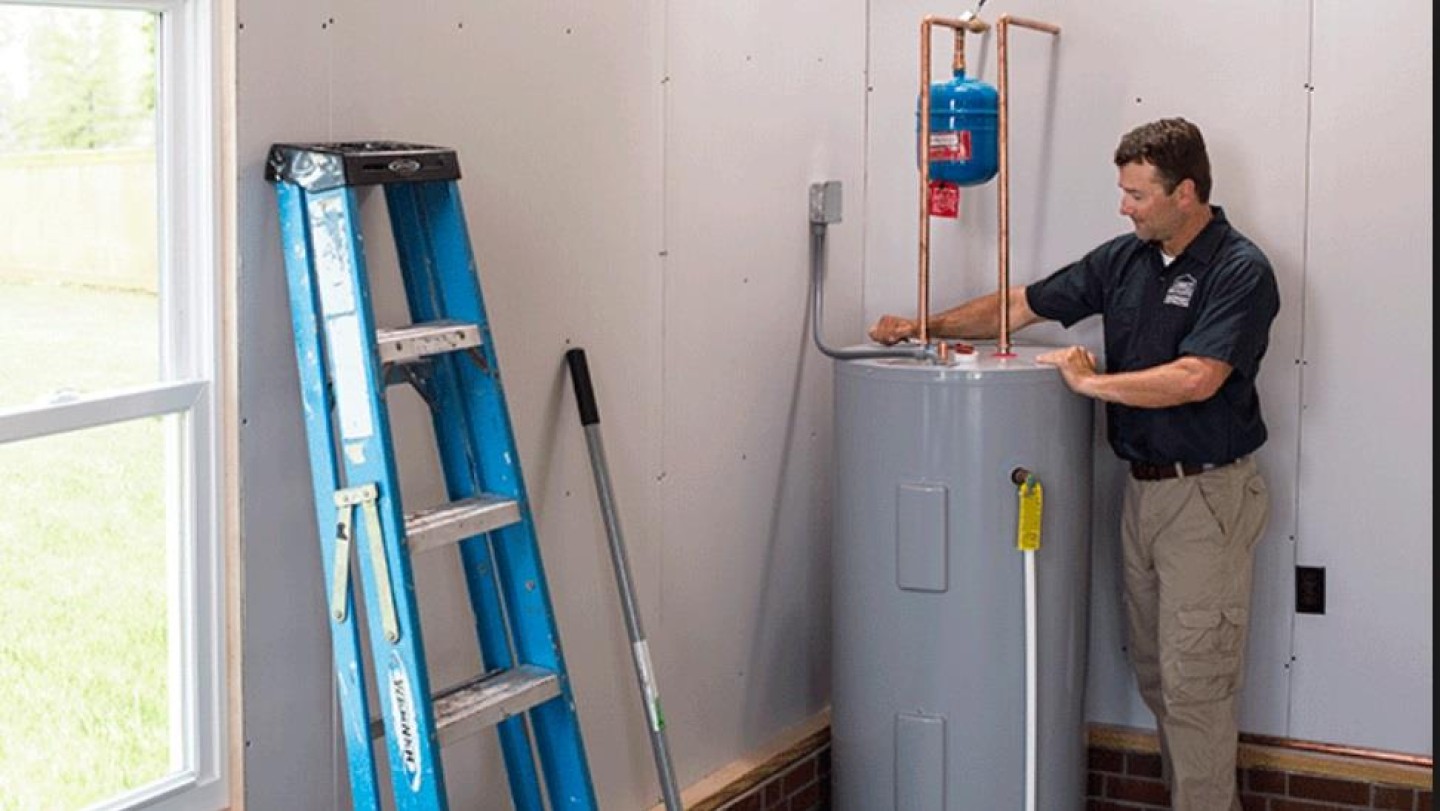
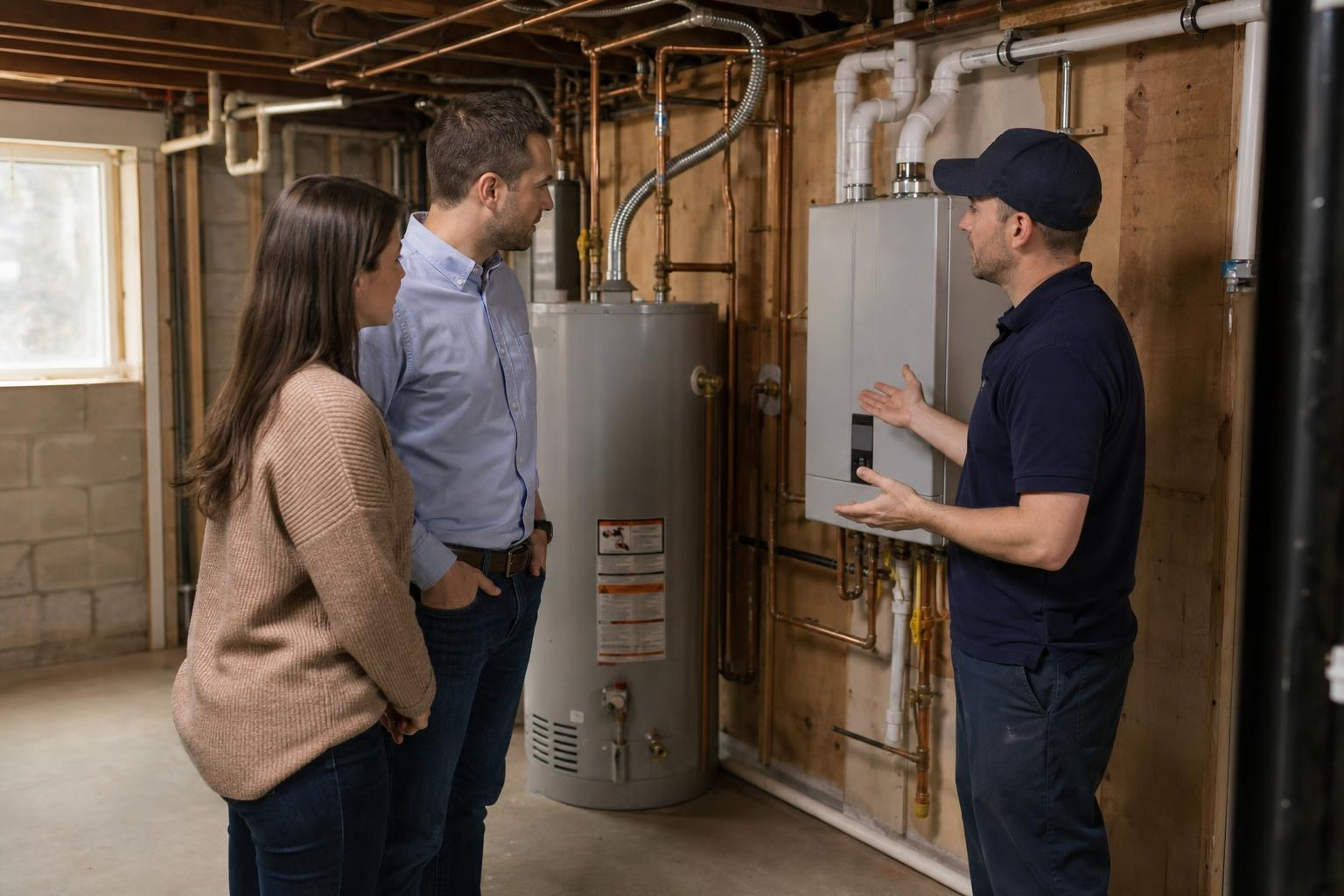
The biggest downside of tank systems is obvious: they take up space. A 50-gallon tank is roughly 5 feet tall and 2 feet in diameter. In older Basking Ridge homes where the mechanical room doubles as storage space, that footprint matters. Tankless units mount on a wall and free up significant floor area.

There's also the failure mode to consider. When a tank water heater fails, it often leaks. Sometimes it leaks a lot. If your water heater sits in a finished basement, a catastrophic tank failure can cause thousands of dollars in water damage. Tankless units can leak too, but the volume of water involved is much smaller since there's no stored reservoir. If your current tank is in a location where a leak would be costly, that's a genuine point in favor of going tankless, or at least installing a drain pan and water alarm with your new tank.

For families on a budget who need hot water restored quickly, a traditional tank replacement remains the practical choice. The technology is proven, parts are available everywhere, and any licensed plumber can handle the installation. You won't get the energy savings or the longevity of a tankless system, but you'll spend half as much and have hot water by dinnertime.

One hybrid option worth mentioning: heat pump water heaters combine a tank with a heat pump that pulls warmth from surrounding air. They're significantly more efficient than standard electric tanks, with energy factors above 3.0 in some cases. They cost more than conventional tanks but less than tankless installations, and they qualify for federal tax credits through the Inflation Reduction Act. The catch is they need to be installed in a space with adequate air volume and they cool the surrounding area, which can be a benefit in summer but a drawback in winter.

Choosing the Right System for Your Basking Ridge Home

The right choice depends on your specific situation, and honest answers to a few questions will point you in the right direction.

If your household uses less than 50 gallons of hot water daily, you plan to stay in the home for 10 or more years, and you can absorb the higher upfront cost, a tankless system will likely save you money over its lifetime and provide a more compact installation. If you have a larger family with heavy simultaneous hot water demand, a tighter budget, or plans to move within five to seven years, a traditional tank replacement makes more financial sense.

Consider your home's existing infrastructure too. If you already have a 3/4-inch gas line and accessible exterior wall venting, the installation cost for tankless drops considerably. If your home needs significant upgrades to accommodate a tankless unit, those costs can push the break-even point out beyond the unit's warranty period.

Whatever you choose, hire a licensed plumber familiar with local code requirements in Bernards Township. Permit requirements, venting specifications, and gas line sizing all need to be done correctly, and mistakes during installation are the leading cause of premature water heater failure regardless of type.

The best water heater is the one that matches your household's actual needs, not the one with the flashiest marketing. Get two or three quotes from local contractors, ask them to itemize installation costs separately from equipment costs, and make your decision based on the full picture.