
If your water heater is showing its age, you're probably weighing your options carefully. A failing unit doesn't give you much time to deliberate, but the choice you make now will affect your energy bills, your home's comfort, and your wallet for the next decade or more. For homeowners considering water heater replacement in Basking Ridge, the decision usually comes down to two main contenders: tankless systems and traditional tank-style units. Both have genuine strengths, and both have drawbacks that salespeople tend to gloss over.
Basking Ridge sits in Somerset County, where winters regularly dip into the 20s and incoming water temperatures can drop below 40°F. That matters more than most people realize, because cold inlet water directly impacts how hard any water heater has to work. The right system for a condo in Phoenix isn't necessarily the right system for a four-bedroom colonial in the Hills. This guide breaks down the real differences between tankless and traditional tank water heaters so you can make a decision based on your actual situation, not marketing hype.
Tankless Water Heater Efficiency
Tankless units, sometimes called on-demand or instantaneous water heaters, heat water only when you turn on a faucet. There's no storage tank keeping 40 or 50 gallons hot around the clock. Instead, cold water flows through a heat exchanger powered by gas burners or electric elements, and hot water comes out the other side in seconds.
The appeal is obvious: why pay to keep a tank of water hot at 3 a.m. when nobody's using it? That standby heat loss from traditional tanks accounts for a meaningful chunk of energy waste, and eliminating it is the core efficiency argument for going tankless.
But efficiency claims need context. Manufacturers often cite energy savings of 24% to 34% compared to conventional tank heaters, and those numbers come from the U.S. Department of Energy. What often gets left out is that those percentages apply to homes using 41 gallons or less per day. For households using closer to 86 gallons daily, the savings drop to 8% to 14%. A family of five running the dishwasher, doing laundry, and taking back-to-back showers won't see the same percentage gains as a couple in a small ranch home.
In Basking Ridge specifically, there's another factor worth considering. Tankless units have to work harder when incoming water is colder. During a January cold snap, your groundwater might come in at 37°F, and the unit needs to raise that to 120°F or higher. That's an 83-degree temperature rise, which can reduce the flow rate a gas tankless unit delivers. A unit rated at 9.5 gallons per minute in mild climates might only deliver 5 or 6 GPM in a New Jersey winter. You might still run out of hot water if two showers are running simultaneously, which defeats one of the main selling points.
Energy Savings
The real-world energy savings from a tankless system in northern New Jersey typically land between 15% and 25% for an average household. On a natural gas bill, that might translate to $100 to $150 per year in savings, depending on your usage patterns and gas rates. Electric tankless units can save a similar percentage on electricity costs, but they often require a significant electrical panel upgrade, sometimes costing $1,500 to $2,500 just for the panel work.
One underappreciated factor is the condensing vs. non-condensing distinction. Condensing tankless units capture heat from exhaust gases and use it to preheat incoming water, pushing efficiency ratings above 95%. Non-condensing models typically run at 80% to 85% efficiency. The condensing units cost more upfront, usually $300 to $600 more than their non-condensing counterparts, but the payback period in a climate like Basking Ridge's is typically five to seven years.
If you're replacing a gas tank water heater with a gas tankless unit, you may also need to upgrade your gas line. Many older homes in the Basking Ridge area have 1/2-inch gas lines running to the water heater, and most tankless units require 3/4-inch lines. That's an additional installation cost that doesn't show up in the sticker price.
Lifespan & Durability
This is where tankless systems genuinely shine. A well-maintained tankless water heater typically lasts 20 to 25 years, compared to 8 to 12 years for a conventional tank unit. That's roughly double the lifespan, which changes the cost calculation significantly.
Tankless units also have replaceable parts. If a heat exchanger or burner assembly fails after 12 years, you can replace that component for a few hundred dollars rather than scrapping the entire unit. Tank water heaters, by contrast, tend to fail catastrophically: the tank corrodes from the inside, and once it starts leaking, the whole thing goes to the curb.
Maintenance matters, though. Basking Ridge has moderately hard water, and mineral buildup inside a tankless heat exchanger can reduce efficiency and eventually cause failure. Annual flushing with food-grade vinegar is recommended, and most manufacturers require it to keep the warranty valid. If you skip this maintenance, you might see performance drop after three to four years and could face a costly heat exchanger replacement by year eight. Budget about $150 to $200 annually for professional flushing if you don't want to do it yourself.
The warranty picture also favors tankless. Most major brands offer 10 to 15-year warranties on heat exchangers and 5-year warranties on parts. Traditional tank units typically come with 6 to 12-year warranties, and the longer warranty models are usually just the same tank with a better anode rod and a higher price tag.
Traditional Tank Systems
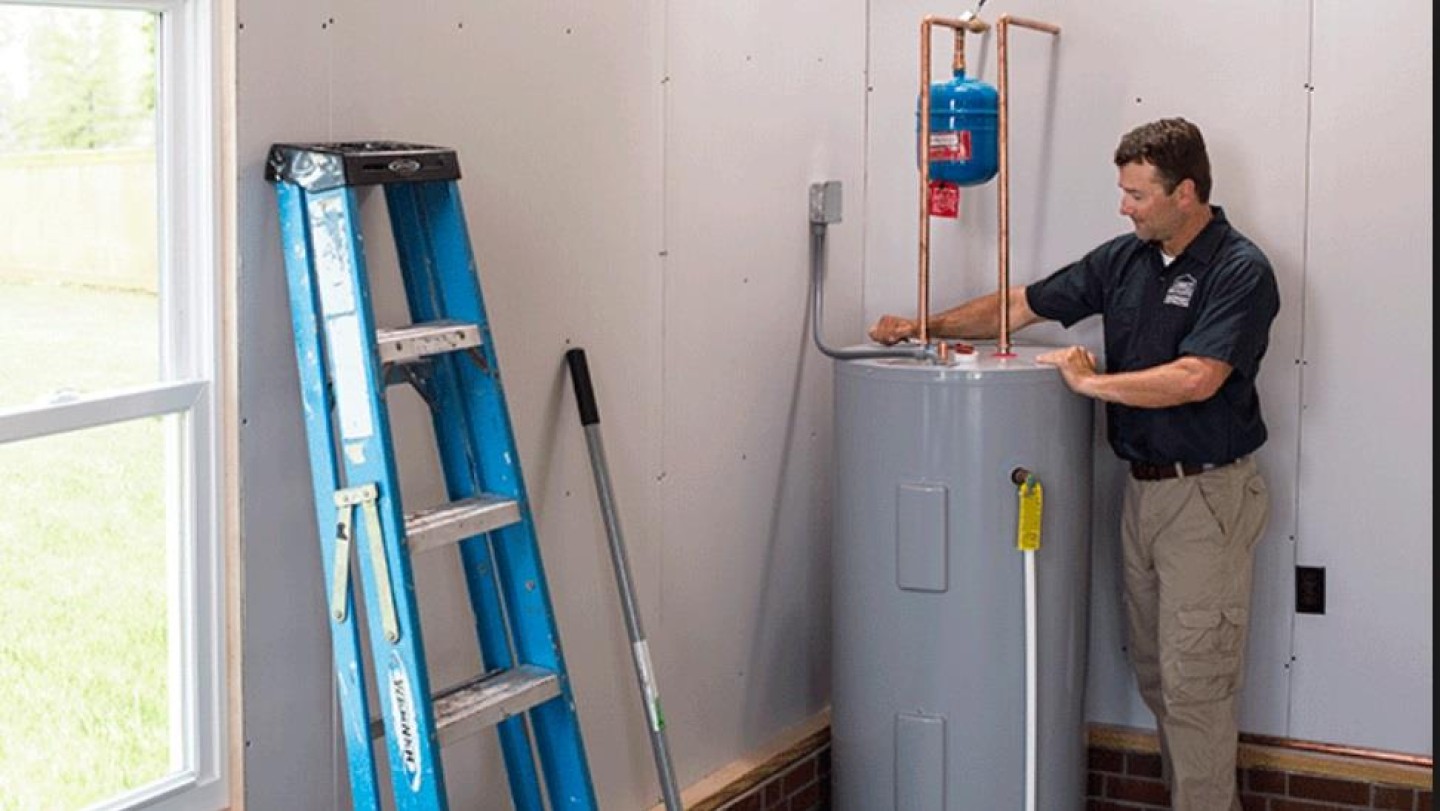
There's a reason traditional tank water heaters still dominate the market. They're simpler, cheaper to buy and install, and they work reliably in virtually every situation. A standard 50-gallon gas tank water heater costs between $800 and $1,500 installed in the Basking Ridge area, compared to $3,000 to $5,000 for a tankless installation that includes any necessary gas line or venting upgrades.
That price gap is the elephant in the room. Even with energy savings of $150 per year, a tankless system takes 10 to 15 years to break even on the higher upfront cost. If you're planning to sell your home in five years, the math doesn't favor tankless unless you believe it adds equivalent resale value, and that's debatable.
Traditional tanks also handle simultaneous demand without blinking. A 50-gallon tank with a good recovery rate can supply two showers, a dishwasher, and a washing machine without anyone noticing a temperature drop. The hot water is already heated and waiting. Tankless units can struggle with this kind of simultaneous demand, especially in cold-climate installations where flow rates are reduced.
Installation is straightforward too. When you're replacing a tank with another tank, the job usually takes three to four hours. The connections are the same, the venting is the same, and the footprint is the same. Swapping a tank for a tankless unit often requires new gas lines, new venting (many tankless units need stainless steel category III or IV vent pipe), electrical connections for controls, and sometimes relocation of the unit to an exterior wall. That installation complexity drives up both cost and the chance of something going wrong.
Modern tank water heaters have also gotten more efficient. Current models with electronic ignition and improved insulation achieve energy factors of 0.65 to 0.70 for gas units, up from 0.55 to 0.60 a decade ago. The gap between tank and tankless efficiency has narrowed, even if tankless still holds an edge.
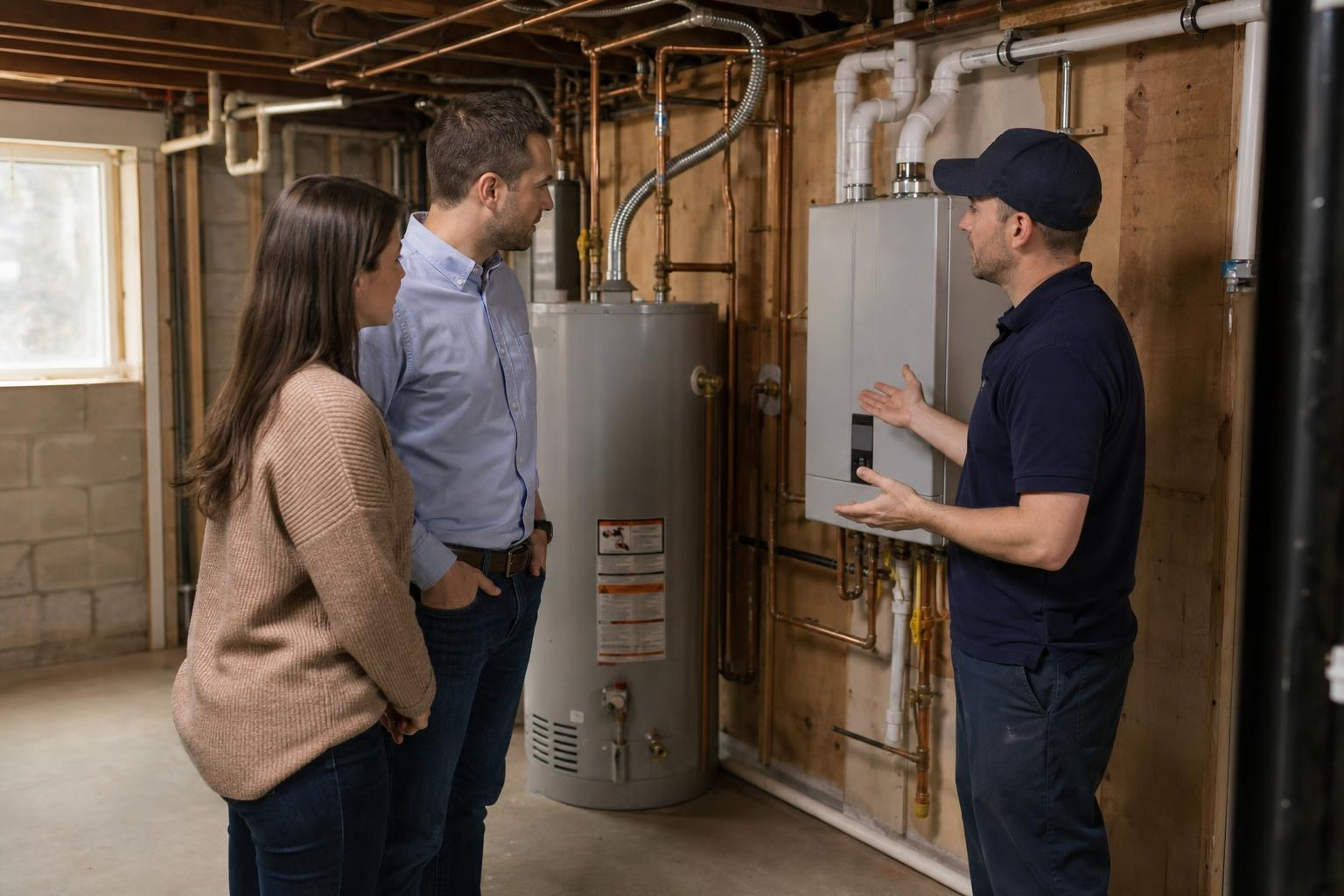
The biggest downside of tank systems is obvious: they take up space. A 50-gallon tank is roughly 5 feet tall and 2 feet in diameter. In older Basking Ridge homes where the mechanical room doubles as storage space, that footprint matters. Tankless units mount on a wall and free up significant floor area.
There's also the failure mode to consider. When a tank water heater fails, it often leaks. Sometimes it leaks a lot. If your water heater sits in a finished basement, a catastrophic tank failure can cause thousands of dollars in water damage. Tankless units can leak too, but the volume of water involved is much smaller since there's no stored reservoir. If your current tank is in a location where a leak would be costly, that's a genuine point in favor of going tankless, or at least installing a drain pan and water alarm with your new tank.
For families on a budget who need hot water restored quickly, a traditional tank replacement remains the practical choice. The technology is proven, parts are available everywhere, and any licensed plumber can handle the installation. You won't get the energy savings or the longevity of a tankless system, but you'll spend half as much and have hot water by dinnertime.
One hybrid option worth mentioning: heat pump water heaters combine a tank with a heat pump that pulls warmth from surrounding air. They're significantly more efficient than standard electric tanks, with energy factors above 3.0 in some cases. They cost more than conventional tanks but less than tankless installations, and they qualify for federal tax credits through the Inflation Reduction Act. The catch is they need to be installed in a space with adequate air volume and they cool the surrounding area, which can be a benefit in summer but a drawback in winter.
Choosing the Right System for Your Basking Ridge Home
The right choice depends on your specific situation, and honest answers to a few questions will point you in the right direction.
If your household uses less than 50 gallons of hot water daily, you plan to stay in the home for 10 or more years, and you can absorb the higher upfront cost, a tankless system will likely save you money over its lifetime and provide a more compact installation. If you have a larger family with heavy simultaneous hot water demand, a tighter budget, or plans to move within five to seven years, a traditional tank replacement makes more financial sense.
Consider your home's existing infrastructure too. If you already have a 3/4-inch gas line and accessible exterior wall venting, the installation cost for tankless drops considerably. If your home needs significant upgrades to accommodate a tankless unit, those costs can push the break-even point out beyond the unit's warranty period.
Whatever you choose, hire a licensed plumber familiar with local code requirements in Bernards Township. Permit requirements, venting specifications, and gas line sizing all need to be done correctly, and mistakes during installation are the leading cause of premature water heater failure regardless of type.
The best water heater is the one that matches your household's actual needs, not the one with the flashiest marketing. Get two or three quotes from local contractors, ask them to itemize installation costs separately from equipment costs, and make your decision based on the full picture.
Recent Comments