
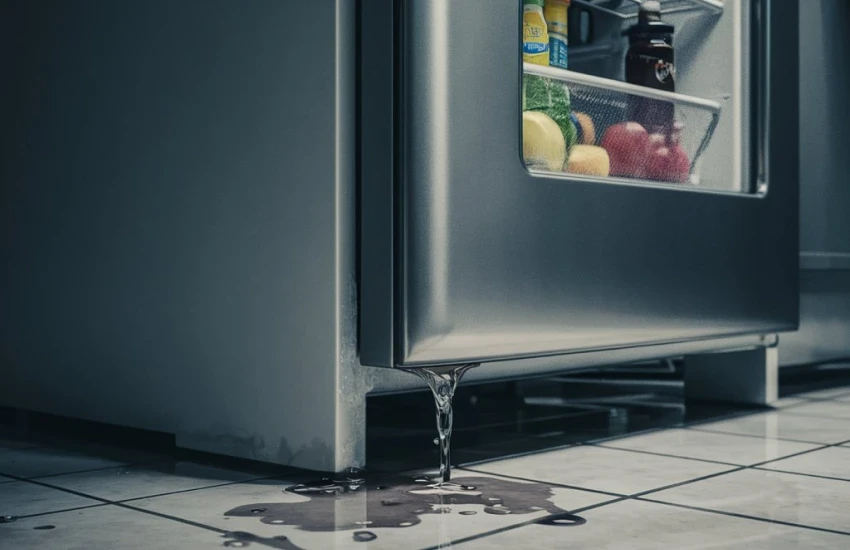
Seeing water under or around a refrigerator can be alarming, especially when you are not sure where it came from. If you are asking why your refrigerator is leaking water, the answer may be as simple as a clogged drain or as serious as a hidden plumbing leak. Refrigerators that make ice or dispense water have several water-related components, so finding the source is the first step toward choosing the right fix. A small puddle should not be ignored, since repeated moisture can damage flooring, cabinets, and nearby walls.
Why Is My Refrigerator Leaking Water?
The most common reasons include a blocked defrost drain, a damaged water supply line, a loose connection, a faulty inlet valve, or a problem with the drain pan. Some refrigerators can also leak when the appliance is not level or when ice builds up in the wrong location.
Identifying the source matters because the visible puddle is not always located directly below the failed component. Water can travel along the bottom of the refrigerator or underneath nearby cabinets before it reaches the floor.
A refrigerator leaking water may also have a problem outside the appliance itself. The supply pipe behind the refrigerator can develop a leak, especially if it has been moved, bent, or disturbed during cleaning or maintenance.
Common Refrigerator Water Leak Causes
Several issues can lead to water appearing around a refrigerator. Understanding the common sources can help you decide whether a simple appliance check is appropriate or whether plumbing service is needed.
A Clogged Defrost Drain
Most modern refrigerators periodically run a defrost cycle. Melted ice is supposed to flow through a small drain into a pan, where the water can evaporate.
When the drain becomes blocked by ice, food particles, or other debris, the meltwater may back up. It can then collect inside the refrigerator, underneath drawers, or eventually reach the floor.
A blocked drain is one of the more common explanations for water appearing inside the fresh food compartment. Repeated ice buildup can point to a deeper drainage or defrost issue that deserves attention.
A Damaged Water Supply Line
Refrigerators with ice makers and water dispensers usually have a dedicated water supply line. That line connects the appliance to the home's plumbing system.
A cracked, pinched, or loose line can release water behind the refrigerator. The leak may be slow enough to go unnoticed at first, then become more visible as moisture accumulates.
Moving the refrigerator can also stress the line. If the appliance is pushed too far against the wall, the tubing can bend sharply or become disconnected from its fitting.
A Loose Connection
Connections at the refrigerator, shutoff valve, or supply line can loosen over time. Even a small gap can allow water to escape whenever the ice maker fills or the dispenser is used.
Look carefully at accessible connections if you can do so safely. Water around a fitting can indicate that the problem is at the connection rather than inside the refrigerator.
A Faulty Water Inlet Valve
The water inlet valve controls the flow of water into the refrigerator. If the valve does not close properly, water can continue to enter when it should not.
A failing valve can produce intermittent leaking, particularly when the ice maker cycles. Because the valve is connected to the water supply, a persistent leak may require more than an appliance adjustment.
A Full or Damaged Drain Pan
The drain pan collects water produced during the refrigerator's defrost cycle. Under normal conditions, the water should evaporate before the pan overflows.
If the pan is cracked, displaced, or unable to drain properly, water may reach the floor. Access to the pan varies by refrigerator model, so forcing panels open can create additional damage.
Why Is My Fridge Leaking Water Inside?
When water appears inside the refrigerator, the defrost drain is one of the first areas to consider. A clogged drain can prevent meltwater from reaching the drain pan.
Food containers can also spill, and condensation can collect when warm air enters the refrigerator frequently. A door that does not seal properly can allow excess moisture to build up, which may contribute to water accumulation.
Check whether the water is limited to a specific shelf, drawer, or area near the rear wall. The location can provide useful information about where the moisture begins.
If water keeps returning after the visible moisture is cleaned up, the underlying cause should be investigated rather than repeatedly wiping the area. Continued water buildup can affect stored food and contribute to odor or interior damage.
Why Is Water Leaking From the Bottom of the Refrigerator?
Water on the floor near the front or rear of the refrigerator often points to a drainage or supply issue. A clogged defrost drain may allow water to escape from the intended path, while a damaged supply line can release water directly onto the floor.
The location of the puddle can be misleading. Water may travel underneath the appliance before becoming visible, so the point where you see water is not always the point where the leak begins.
If you are trying to determine why your refrigerator is leaking water from the bottom, inspect the accessible supply line and connections first. Turn off the refrigerator's water supply if there is an active leak and you can safely reach the shutoff valve. If water continues to appear, the source may be elsewhere in the plumbing system.
Understanding Where the Water Comes From
The phrase water leaking from refrigerator can describe several different problems, so the source needs to be traced carefully. Water that starts inside the cabinet often has a different cause from water that begins behind the appliance.
The most useful clue is timing. Notice whether the leak appears after the ice maker fills, after the dispenser is used, during a defrost cycle, or without any obvious trigger. Those patterns can help separate an appliance drainage problem from a plumbing supply issue.
Knowing the common refrigerator water leak causes can also prevent guesswork. A technician can examine the appliance connections, supply line, valves, and nearby plumbing to determine whether the refrigerator or the home's water system needs attention.
What to Check When a Refrigerator Leaks
Start by identifying whether the water is coming from inside the refrigerator, behind the appliance, or from the floor area nearby. That distinction can narrow the possible causes.
Check the Water Supply
If your refrigerator has an ice maker or dispenser, inspect the water line for visible cracks, kinks, or loose fittings. Avoid pulling hard on the refrigerator because doing so can put extra stress on the tubing.
A steady leak from the supply line is a plumbing concern. Shutting off the water supply can limit additional damage until the source is repaired.
Check the Defrost Drain
Look for standing water inside the refrigerator, particularly below drawers or along the rear wall. A recurring pool of water in this area can point toward a blocked defrost drain.
Do not use sharp objects to remove ice from internal components. Puncturing a refrigerant line or damaging a plastic drain can turn a small problem into a costly repair.
Check the Appliance Position
A refrigerator that is not positioned correctly can have drainage issues or door sealing problems. Make sure the appliance is stable and that the doors close properly.
The exact leveling requirements vary by model, so follow the manufacturer's instructions when making adjustments. Avoid making major changes to the appliance if the leak appears to be coming from the home's plumbing.
When a Refrigerator Leak Is a Plumbing Problem
Not every leak around a refrigerator is caused by the appliance. The water line serving the refrigerator is part of the home's plumbing, and leaks at the shutoff valve, supply tubing, or connection can require plumbing expertise.
A leak can also develop inside the wall behind the refrigerator. If the wall, cabinet, or floor remains wet even after the appliance is turned off, the source may be hidden from view.
When the source is difficult to locate, professional water leak detection services can help identify where water is coming from before unnecessary repairs are made. Accurate diagnosis is especially useful when moisture appears to be traveling from behind cabinets, walls, or flooring.
Signs You Should Not Ignore
A small puddle may seem manageable, but repeated water can cause problems over time. Swollen flooring, damaged cabinet bases, staining, musty odors, or damp drywall can indicate that the leak has been present longer than expected.
Pay attention to when the water appears. If it happens after using the dispenser, the supply connection or dispenser system may deserve inspection. Water that appears after an automatic defrost cycle points toward a drainage issue.
Frequent puddles are another reason to investigate. Cleaning the floor does not address the source, and repeated moisture can spread into areas that are difficult to see.
How to Prevent Refrigerator Water Leaks
Basic maintenance can reduce the chance of some refrigerator leaks. Keep the area around the appliance clean and avoid pushing the refrigerator so tightly against the wall that the supply line becomes sharply bent.
Inspect visible tubing and connections from time to time. If you notice discoloration, mineral buildup, moisture, or a fitting that appears loose, address the issue before a larger leak develops.
Keep the refrigerator doors closing properly as well. Damaged seals can allow warm air to enter, increasing condensation and moisture inside the appliance.
Professional inspection is appropriate when a leak returns, the source cannot be identified, or water appears to be coming from a wall, floor, or plumbing connection.
What to Do If Your Refrigerator Is Leaking Water
If water is actively flowing, stop the water supply to the refrigerator when you can safely access the shutoff valve. Move nearby items away from the wet area and dry standing water to reduce the chance of floor damage.
Avoid disassembling the refrigerator unless you are familiar with its components. The appliance contains electrical parts and sealed systems that can be damaged by improper repairs.
When the leak involves the household water line or the source remains unclear, a licensed plumbing professional can inspect the connections and surrounding plumbing. Jersey Plumbing has nearly 30 years of experience serving Somerset, Morris, Hunterdon, Essex, and Union counties, with a focus on clear communication and dependable service.
Conclusion
If you are wondering why your refrigerator is leaking water, start by identifying where the water begins rather than where the puddle ends. A clogged defrost drain, damaged supply line, loose connection, faulty valve, or plumbing leak can all produce similar symptoms. Finding the actual source early can limit water damage and help you get the right repair without unnecessary work.
Frequently Asked Questions
Why is my refrigerator leaking water onto the floor?
Water on the floor can come from a clogged defrost drain, damaged supply line, loose connection, drain pan, or water inlet valve. Finding the point where the water starts is more useful than focusing only on the puddle.
Can a clogged refrigerator drain cause a leak?
Yes, a blocked defrost drain can cause meltwater to back up inside the refrigerator. Water may collect beneath drawers or eventually escape onto the floor when it cannot follow its normal drainage path.
Why is my refrigerator leaking water from behind?
A leak behind the refrigerator often involves the water supply line, shutoff valve, or another plumbing connection. If the source is not visible, professional inspection can help identify the location without unnecessary appliance disassembly.
Should I turn off the refrigerator water supply?
If water is actively leaking from the supply line or a connection, turning off the refrigerator's water supply can reduce additional water damage. Make sure you can reach the shutoff valve safely before doing so.
Can a refrigerator leak damage the floor?
Repeated water exposure can damage flooring, cabinet bases, drywall, and nearby materials. Even a slow leak should be investigated when it keeps returning, since moisture can spread beneath surfaces.
When should I call a plumber for a refrigerator leak?
Call a plumber when the leak appears to involve the home's water line, shutoff valve, wall, floor, or another plumbing connection. Professional diagnosis is also useful when the source cannot be identified.
Recent Comments